Planning a corporate event is a major investment. Whether you are organizing an annual day celebration, product launch, employee engagement program, conference, inauguration, or family day event, choosing the right event management partner can directly impact attendance, employee experience, brand perception, and event ROI.
Many organizations compare vendors based only on price. However, the lowest quotation does not always deliver the best results.
This is where a Corporate Event Vendor Evaluation Matrix becomes valuable.
A structured evaluation framework helps HR teams, administration departments, procurement teams, marketing professionals, and corporate decision-makers compare event management companies objectively before making a final decision.
If your organization is looking for a professional corporate event management company in Chennai, selecting the right partner begins with a structured vendor evaluation process.
What Is a Corporate Event Vendor Evaluation Matrix?
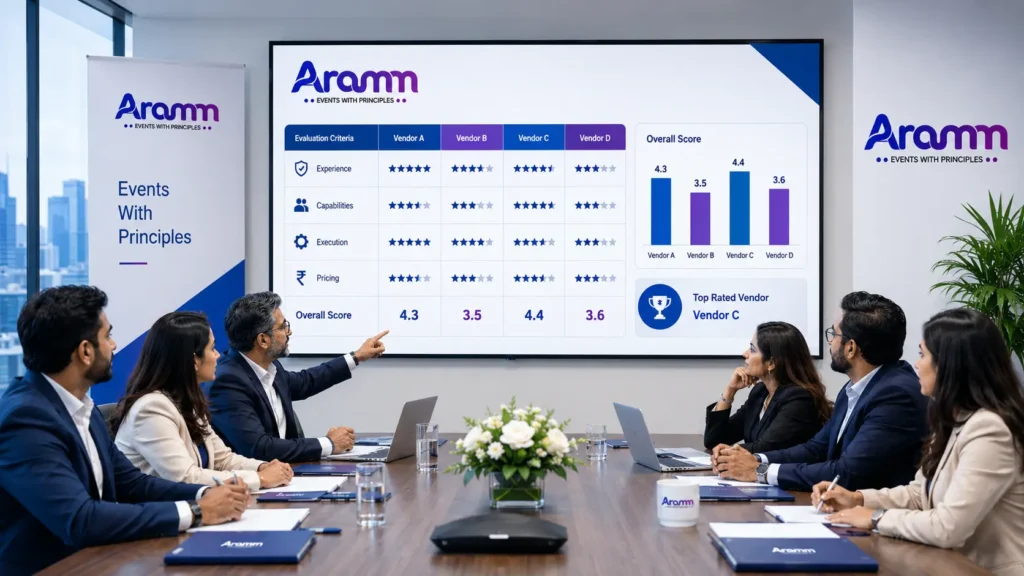
A Corporate Event Vendor Evaluation Matrix is a scoring framework used to evaluate and compare multiple event management companies using predefined criteria.
Instead of relying on assumptions or presentations alone, organizations assign scores and weightage to important factors such as:
- Corporate event experience
- Creative capabilities
- Vendor network
- Budget management
- Risk management
- Event technology
- Execution strength
- Reporting and ROI measurement
The vendor with the highest overall score becomes the preferred choice.
Why Companies Need a Vendor Evaluation Framework
Without a structured evaluation process, organizations often face challenges such as:
- Budget overruns
- Poor event execution
- Vendor coordination issues
- Last-minute event disruptions
- Low attendee engagement
- Lack of measurable outcomes
A vendor evaluation matrix reduces these risks by creating a transparent and objective selection process.
Before comparing vendors, many organizations first create a detailed Request for Proposal (RFP) document to ensure every event management company receives the same project requirements.
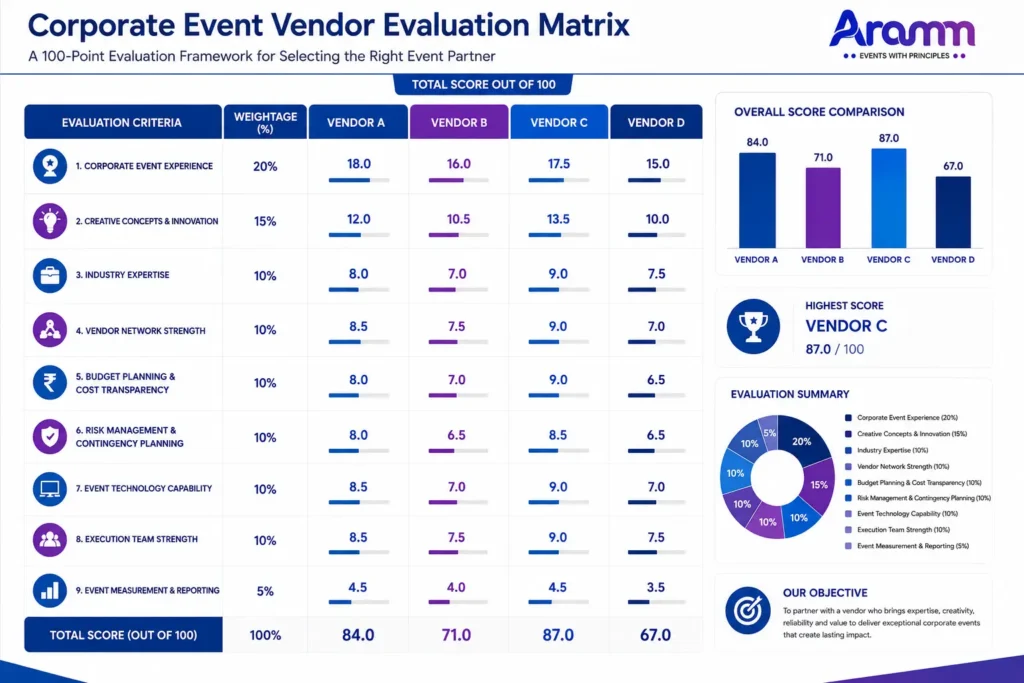
Corporate Event Vendor Evaluation Matrix (100-Point Framework)
| Evaluation Criteria | Weightage | What to Assess |
|---|---|---|
| Corporate Event Experience | 20 Points | Experience handling similar corporate events |
| Creative Concepts & Innovation | 15 Points | Event themes, engagement ideas, branding |
| Industry Expertise | 10 Points | Understanding of your industry requirements |
| Vendor Network Strength | 10 Points | Audio, video, stage, venue, artists, logistics |
| Budget Planning & Cost Transparency | 10 Points | Detailed budgeting and cost control |
| Risk Management & Contingency Planning | 10 Points | Backup plans and crisis management |
| Event Technology Capability | 10 Points | Registration, event apps, analytics, reporting |
| Execution Team Strength | 10 Points | Project management and on-ground coordination |
| Event Measurement & Reporting | 5 Points | ROI reporting and performance analysis |
| Total | 100 Points |
How to Use the Evaluation Matrix
Step 1: Define Event Objectives
Before evaluating vendors, identify your event goals.
Examples:
- Employee engagement
- Brand awareness
- Product launch success
- Customer acquisition
- Dealer relationship strengthening
- Employee recognition
Clear objectives make vendor evaluation easier.
Step 2: Create a Shortlist
Shortlist 3–5 event management companies based on:
- Corporate event portfolio
- Industry experience
- Client testimonials
- Event case studies
- Service offerings
Avoid comparing too many vendors, as it can slow down decision-making.
Step 3: Send an Event Brief
Provide all shortlisted vendors with the same information:
- Event objectives
- Expected audience size
- Event format
- Budget range
- Event date
- Venue requirements
- Deliverables
A detailed event brief helps vendors prepare accurate proposals and budget estimates.
Organizations planning large-scale events should also review their corporate event budget planning strategy before requesting quotations.
Step 4: Score Each Vendor
Assign scores for every evaluation criterion.
| Criteria | Weightage | Vendor A | Vendor B | Vendor C |
|---|---|---|---|---|
| Experience | 20 | 18 | 15 | 12 |
| Creativity | 15 | 13 | 10 | 14 |
| Vendor Network | 10 | 8 | 9 | 7 |
| Risk Management | 10 | 9 | 7 | 6 |
| Technology | 10 | 8 | 6 | 9 |
| Execution Team | 10 | 9 | 8 | 7 |
| Budget Management | 10 | 8 | 9 | 8 |
| Reporting | 5 | 4 | 3 | 2 |
| Total Score | 100 | 77 | 67 | 65 |
This method helps stakeholders make data-driven decisions.
Key Questions to Ask Every Event Management Company
Before selecting a vendor, ask:
Experience
- How many corporate events have you managed?
- Have you handled events similar to ours?
- Can you share relevant case studies?
Planning
- What is your planning process?
- How do you manage timelines and approvals?
Risk Management
- What contingency plans do you maintain?
- How do you handle vendor failures?
Organizations should review the vendor’s approach to risk management and contingency planning for corporate events before signing contracts.
Budget
- How do you manage budget overruns?
- Are there any hidden costs?
Reporting
- How do you measure event success?
- What post-event reports do you provide?
Vendors that can demonstrate clear reporting methods are usually better equipped to track and improve corporate event ROI.
Common Mistakes Companies Make During Vendor Selection
Choosing the Lowest Quote
Low pricing often results in compromised quality, limited resources, and unexpected expenses later.
Ignoring Risk Management
Many organizations overlook contingency planning until a crisis occurs.
Focusing Only on Presentations
A great presentation does not always translate into flawless execution.
Not Verifying References
Always review previous projects and client feedback.
Comparing Different Scopes
Ensure all vendors are quoting for the same scope of work.
A structured corporate event checklist can help procurement teams ensure all vendor proposals are compared consistently.
Signs of a Strong Corporate Event Management Partner
Look for vendors that demonstrate:
✅ Structured planning process
✅ Strong vendor relationships
✅ Transparent budgeting
✅ Dedicated project managers
✅ Proven event execution experience
✅ Clear communication
✅ Event technology expertise
✅ Post-event reporting capabilities
When Should Companies Use a Vendor Evaluation Matrix?
A vendor evaluation framework is especially useful for:
- Annual Day Celebrations
- Product Launch Events
- Employee Engagement Programs
- Family Day Events
- Dealer Meets
- Customer Meets
- Corporate Conferences
- Factory Inaugurations
- Corporate Anniversary Events
- Recognition and Reward Programs
For large-scale events, a structured evaluation process can significantly reduce operational risk and improve overall event outcomes.
Final Thoughts
Selecting an event management company should be based on more than pricing alone. A structured Corporate Event Vendor Evaluation Matrix helps organizations compare vendors objectively, minimize event risks, and maximize event outcomes.
By evaluating experience, creativity, execution capability, technology, and risk management, companies can identify the event partner best suited to achieve their business objectives.
Organizations that follow a structured vendor selection process often experience smoother event execution, better attendee engagement, and stronger return on investment.
If you are currently evaluating vendors for an upcoming corporate event, partnering with an experienced Corporate Event Management Company in Chennai can help simplify planning, execution, and post-event measurement.
If your organization is evaluating event management companies for an upcoming annual day, conference, product launch, or employee engagement program, Aramm Events can help you plan and execute successful corporate events across Chennai. Reach Us