Table of Contents
Introduction
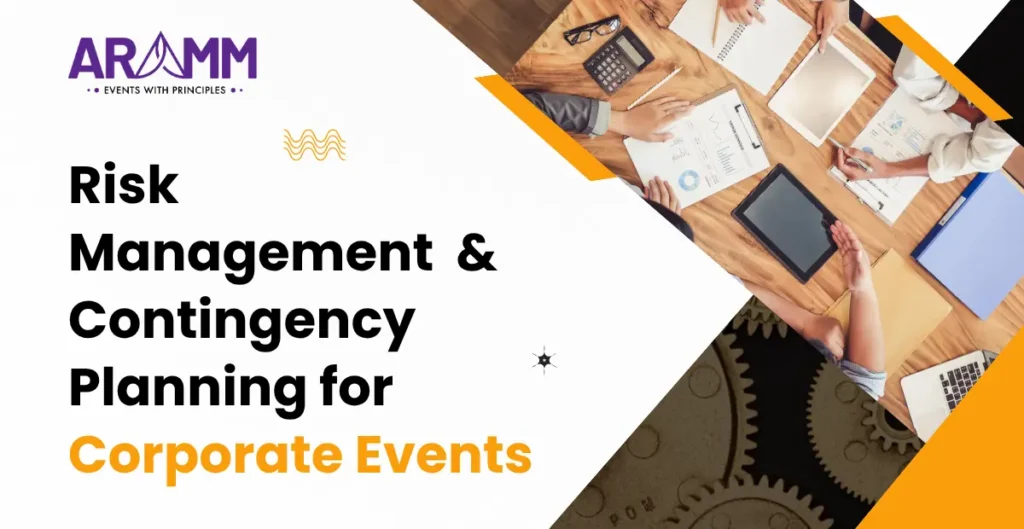
Risk Management & Contingency Planning for Corporate Events is an essential part of organising business gatherings, large-scale meetings, conferences and similar events. When planning a corporate event, having the right risk management & contingency planning for corporate events in place ensures that unexpected problems are handled smoothly. This article explores the major threats, the planning process, mitigation strategies, and how you can tie this into your event‐management partner’s services.
What is Risk Management & Contingency Planning for Corporate Events?
When we talk about “risk management & contingency planning for corporate events”, we refer to the proactive steps you take to identify, evaluate and plan for potential issues during your event, and then create a backup or contingency plan so things still run smoothly. The goal is to ensure the event stays on message, remains on budget and protects your brand reputation.
Why it matters for corporate events
Corporate events often involve high stakes: senior management presence, media coverage, client relationships, large budgets, many vendors and complex logistics. If you don’t incorporate risk management & contingency planning for corporate events from the start, you could face schedule delays, budget overruns, technical failures, or even reputational damage. By addressing risk and contingency early, you make your event resilient.
Key Risks in Corporate Events
Let’s break down the major categories of risks you should consider when doing risk management & contingency planning for corporate events.
Operational Risks
These include logistical failures such as venue problems, AV (audio-visual) breakdowns, power outages, transport delays, or vendor no-shows. An event with poor operational timing or missing equipment immediately impacts guest experience.
Financial Risks
Budget overruns, hidden costs, last-minute changes increase risk. Financial controls and contingency budgeting are vital to the risk management & contingency planning for corporate events process.
Reputational Risks
For corporate events, your brand is visible. If the event feels disorganised, technical glitches happen, or messaging is inconsistent, your reputation can take a hit. Good risk management & contingency planning for corporate events addresses this by planning for communication issues, guest experience, and messaging alignment.
Health & Safety Risks
Especially relevant with large gatherings: crowd control, emergency evacuation, medical incidents, food safety, fire hazards. The risk management & contingency planning for corporate events must include safety protocols, first-aid arrangements and compliance with local regulations.
Environmental & External Risks
Weather changes (for outdoor segments), transport strikes, political unrest, local authority restrictions—all external to your core plan but still within risk management & contingency planning for corporate events.
The Risk Management & Contingency Planning for Corporate Events Framework
A practical, structured framework helps you implement effective risk management & contingency planning for corporate events. Here’s a step-by-step guide:
1. Identify Risks
Gather your internal team, vendor partners and venue contacts to list potential risks: what could go wrong? Think broadly: technical, human, environmental, financial. Document each risk clearly.
2. Assess Risks
For each risk, determine its likelihood (low/medium/high) and impact (low/medium/high). Then prioritise the risks that carry high impact and high likelihood. This assessment is central to risk management & contingency planning for corporate events.
3. Plan Mitigation Strategies
For each key risk, define a mitigation strategy. For example: choosing a venue with backup power for AV failure, or contracting two transport vendors to cover logistics. Incorporating these mitigation tactics into your risk management & contingency planning for corporate events reduces exposure.
4. Develop Contingency Plans
For residual risks (those you cannot fully prevent), create contingency plans: “If X happens, we switch to Y.” For example: if the keynote speaker is delayed, have a pre-recorded video ready; if outdoor rain happens, have indoor space reserved. This is the heart of risk management & contingency planning for corporate events.
5. Assign Responsibility & Communication Protocols
You must assign team members to own each risk and contingency plan. Document who will activate the plan, how communication flows, and how decisions are made. This ensures your risk management & contingency planning for corporate events runs like a well-rehearsed drill.
6. Monitor, Test & Review
During the lead-up and on the event day, monitor risk indicators (weather forecasts, vendor readiness, attendee number changes). Run walk-throughs or rehearsals when possible. After the event, review what worked and what didn’t—refining your risk management & contingency planning for corporate events for next time.
Partnering with a Specialist Corporate Event Management Company
Having a capable event management partner can make a major difference in executing your risk management & contingency planning for corporate events. Engaging a specialist firm who has experience with such frameworks adds confidence. For example, if you choose a dedicated firm for your purpose, they already have vendor networks, backup options, safety compliance experience—and this strengthens your contingency readiness.
If you are looking for such support, a trusted choice is a professional provider of corporate event services. You can learn about one reliable option here: Corporate Event Management Company in Chennai which offers full-service planning, including risk management and contingency planning for corporate events.
Corporate Event Risk Assessment
A solid part of your risk management & contingency planning for corporate events is the corporate event risk assessment. This means creating a checklist of risks, evaluating them, and deciding which require the strongest controls. When doing your assessment, involve stakeholders (sponsors, venue, AV vendor, transport). Document findings and integrate them into your wider contingency plan for the corporate meeting or event.
Contingency Plan for Corporate Meetings
A tailored contingency plan for corporate meetings ensures that your specific format is covered: board meeting, town hall, dealer meet, incentive event. Each format has unique risks. For example, with a town hall you might worry about AV/microphone failure or guest seating; with an incentive event you may worry about transport or outdoor environment. Your contingency plan should address the format explicitly.
Event Logistics Backup Plan
Logistics is a major risk category. An event logistics backup plan covers transport delays, venue access issues, vendor cancellations, or power/AV failures. Part of your risk management & contingency planning for corporate events is securing backup vendors, arranging alternate routes, and building timing buffers.
Conference Contingency Strategies
If you’re hosting a full-scale conference, then conference contingency strategies come into play. These include backup speakers, alternate session formats, overflow rooms, digital/virtual delivery options if physical gathering faces disruption. These strategies align closely with robust risk management & contingency planning for corporate events.
Corporate Meeting Emergency Plan
An emergency plan for a corporate meeting is the response mechanism when the “worst case” happens: fire evacuation, medical incident, major technology failure. During your risk management & contingency planning for corporate events you should define triggers, responsibilities, communication routes (both internal and external), and guest-notification protocols.
Practical Tips & Best Practices
Here are some actionable tips you can apply to strengthen your risk management & contingency planning for corporate events:
- Engage key stakeholders early and run a risk‐workshop for your event.
- Build in timing buffers (e.g., allow extra 15–30 minutes before the main session starts).
- Always contract backup vendors (AV, transport, catering) or include penalty clauses.
- Choose venues with reliable power supply, multiple access points, and local staffing.
- Ensure on-site contact persons have mobile numbers, event maps, and escalation lists.
- Simulate a mini “what if” scenario (e.g., keynote speaker cancels, weather shifts) and walk through the contingency plan.
- Monitor live indicators on event day: attendee check-in numbers, technology readiness, weather updates, traffic conditions.
- Communicate clearly: have a central “control desk” or event command centre so decisions are rapid and documented.
- After the event, hold a debrief: what risk happened, how did contingency work, what improvements next time?
- Include a documented contingency budget—usually 5–10 % of your event budget reserved for unforeseen issues.
How This Helps Your Event Succeed
Putting effective risk management & contingency planning for corporate events in place has many benefits:
- You reduce surprises and reduce stress on your team.
- You preserve brand reputation by delivering a smooth experience.
- You improve cost-control by avoiding last-minute premium charges.
- You enhance stakeholder confidence (clients, sponsors, senior management).
- You increase the chance that your event objectives (engagement, messaging, networking, ROI) are met.
By aligning with an experienced partner specialising in corporate events, your risk management & contingency planning for corporate events becomes more robust and manageable.
Case Scenario: Applying It to a Town Hall Event
Imagine you are running a town hall for 400 employees across two shifts. Here’s how you apply risk management & contingency planning for corporate events:
- Risk identification: AV failure, speaker delay, last-minute room change, café queue delays.
- Risk assessment: AV failure = high impact, medium likelihood; speaker delay = medium impact, low likelihood.
- Mitigation: Use venue with backup AV, have standby laptop/stream; schedule speaker with buffer time; book catering with extra staff.
- Contingency: If AV fails, switch to pre-recorded session and host Q&A via chat; if speaker delay >15 minutes, run an interactive icebreaker session; if room change needed, signage and staff ready.
- Responsibility: AV lead on standby, venue manager on backup room, catering head on quick re- deploy.
- Monitor and review: On event day, track AV check at start 60 mins before; monitor attendee check-in, food service start times; after event, capture feedback and list improvements.
This kind of scenario shows how risk management & contingency planning for corporate events turns abstract planning into concrete outcomes.
How to Choose the Right Event Management Partner
When you select an event management agency to support your risk management & contingency planning for corporate events, investigate these features:
- Experience with your type of event (town hall, product launch, conference).
- Proven backup plans and documented processes.
- Local network of vendors and knowledge of local logistics (particularly relevant if your event is in Chennai or south India).
- Clear communication structure and single point of accountability.
- Transparent contingency budgeting and defined process for engages when things go off-plan.
If you are looking for a corporate partner in Chennai, you can explore Corporate Event Management Company in Chennai which aligns with professional standards and supports comprehensive risk and contingency planning.
Conclusion
If you want your next corporate event to run smoothly, reduce surprises and deliver real outcomes, then embedding Risk Management & Contingency Planning for Corporate Events into your planning is non-negotiable. By systematically identifying risks, assessing them, developing mitigation and contingency plans, assigning responsibilities, and reviewing outcomes, you significantly increase your chance of success. And when you partner with a professional event management specialist, the process becomes more reliable and less stressful.
If you’re ready to move ahead, consider reaching out to a dedicated agency to handle your event logistics and risk management from end to end. Reach Aramm Events