Corporate event management is the process of planning, coordinating, and running business events, from annual days to factory inaugurations, under one accountable team instead of several scattered vendors. This guide breaks down what the work actually includes, how the process unfolds step by step, and how to decide whether you need an in-house effort or a dedicated partner. By the end, you’ll know exactly what to ask before bringing anyone on board in Chennai.
Someone in HR or operations just got handed an event to organize, and they’re not sure where to start. That’s usually how the question comes up: what is corporate event management, really, and does it cover the whole job or just the decorations?
In plain terms, it’s the structured process of planning, coordinating, and running any event a business holds for its employees, clients, or stakeholders. It covers everything from the first planning call to the last thank-you email, not just the day itself.
If you’ve been asked to organize an annual day, a product launch, or a plant inauguration with no event background, you’re not alone. This guide walks through what corporate event management includes, how the process unfolds week by week, and how to decide whether you need outside help.
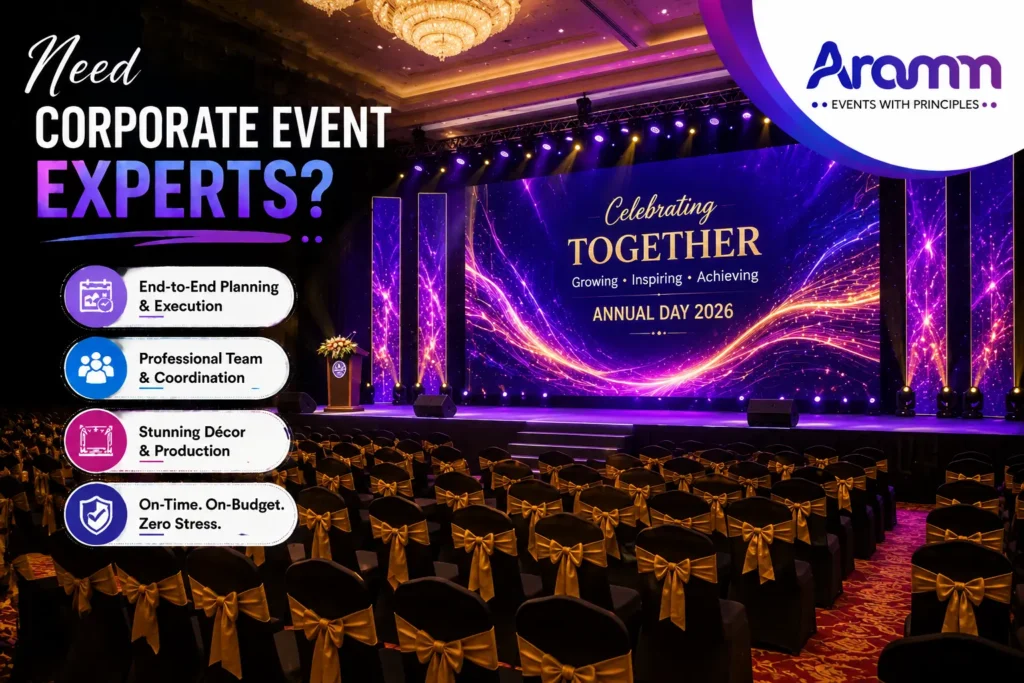
Need Corporate Event Experts?
What Is Corporate Event Management?
Corporate event management is the end-to-end process of planning, coordinating, and executing events a business holds for employees, clients, or the public. It covers concept design, vendor coordination, permits, on-day execution, and post-event reporting, all handled by one team instead of several separate vendors.
Most teams break this event management process into six moving parts:
- Planning and strategy: setting goals, budget range, and overall direction
- Vendor and logistics coordination: sound, lighting, catering, and transport under one roof
- Creative and theme design: stage layout, decor, and branding that match the occasion
- Permits and compliance: venue, police, and local authority clearances
- On-day execution: managing the event live, start to finish
- Post-event reporting: photos, feedback, and a summary for leadership
If you’ve been assigned an event with no background in any of this, you’re in good company. Most first-time organizers learn it the same way: one event at a time.
Why This Matters for Your Business
A well-run event does more than fill an afternoon. It tells your employees, clients, and partners exactly how much care your organization puts into the details, and that perception sticks.
For HR and operations teams specifically, having one team handle the planning means you’re not chasing five vendors at once while also answering emails from your actual job. One point of contact for the venue, decor, catering, and permits frees up real hours in your week.
There’s also a quieter benefit: morale. Gallup’s global engagement research puts worker engagement at a record high of just 23 percent, which still means most employees feel disconnected from their day-to-day work. Recognition events, annual days, and family days are some of the simplest tools HR teams have to close that gap, because they give people a reason to feel seen outside a performance review.
The demand for this kind of structured support keeps growing too. Corporate clients now make up more than half of India’s expanding MICE market (meetings, incentives, conferences, and exhibitions), which shows just how mainstream organized business events have become.
A poorly handled event has the opposite effect. Guests notice late starts, mismatched branding, and confused staff faster than they notice a flawless one, and that reflects directly on the team that organized it.
Planning a Corporate Event?
From Annual Days to Factory Launches: What Counts as a Corporate Event?
Corporate events come in more shapes than most people expect. If your company is holding it and inviting employees, clients, or officials, it almost certainly falls under this umbrella.
On the employee side, you’ve got annual days, family days, team outings, and recognition events, the ones built around morale and culture. On the business side, there are product launches, dealer meets, and conferences aimed at clients, partners, or the press.

Then there’s a category many first-time organizers forget: factory inaugurations, plant openings, and government or institutional events. These come with their own protocol, security, and permit requirements, which is exactly why companies in Chennai’s manufacturing belt, around Oragadam and Sriperumbudur, often bring in a partner who already knows the drill.
You can see the full breakdown, with examples for each format, in our guide to types of corporate events.
What Do Corporate Event Management Services Include?
Corporate event management services usually cover four things: planning and concept design, vendor and logistics coordination, permit and regulatory handling, and on-day execution with post-event support. Put together, that’s everything from your first planning call to the report you hand your leadership afterward.
Planning and concept design comes first. This is where goals, budget, and the overall theme get locked in before anyone books a single vendor.
Vendor and logistics coordination follows. Sound, lighting, catering, decor, and manpower all get booked and managed under one single-vendor accountability model, so you’re dealing with one team instead of five separate invoices.
Permit and regulatory handling matters more in Chennai than most people realize. Venue clearances, police permissions, and local authority approvals can stall an event if they’re missed. Our corporate event permits in Chennai guide breaks down exactly what’s needed and when to apply.
Finally, on-day execution and post-event support close the loop: stage management, guest flow, photography, and a feedback report once the lights come down.
If you want the full breakdown of what a provider should be offering you, this guide on services to expect is worth a read before you sign anything.
Need End-to-End Event Management?
How Does the Process Work, Step by Step?
Most agencies follow a four-step process: understanding your goals, planning and booking vendors, running the event itself, and reviewing what happened afterward. It’s the same plan-do-check-act logic used in quality management, applied to a single day instead of an ongoing system.
- Understanding and briefing: your goals, audience, budget range, and brand guidelines get mapped out first.
- Planning and vendor setup: the concept gets finalized, vendors get booked, and permit applications go in.
- Execution: on-ground setup, rehearsals, and live management on the day itself.
- Post-event review: feedback collection, a summary report, and the photos and videos you’ll actually use later.
If you’re planning your first event and want a more detailed walkthrough, our step-by-step guide to planning a corporate event covers each stage in more depth.
Should You Hire a Partner or Manage Events In-House?
Small internal meetings with no outside guests are usually fine to run in-house. Once you’re coordinating multiple vendors, applying for permits, or hosting senior leadership and clients, a single-vendor partner reduces risk and saves your team’s time.
Plenty of HR and admin teams already have someone who’s good at organizing things. That’s enough for a twenty-person town hall.
It stops being enough once you’re managing two hundred plus guests, a stage, catering, and a permit application at the same time, all while still doing your actual job. That’s the point where an in-house event team usually runs out of bandwidth, and a dedicated corporate event management company earns its fee back in saved hours and fewer last-minute surprises.
Before deciding either way, it helps to know what a realistic budget looks like. Our corporate event budget planning guide is a good starting point.
How to Choose the Right Corporate Event Management Partner in Chennai
Once you’ve decided your corporate event management needs outside help, the choice comes down to a handful of things worth checking before you sign anything.
Look for local Chennai experience first: someone who already knows venues, vendors, and permit offices across areas like T. Nagar, OMR, and Porur saves you weeks of trial and error. Ask whether they offer single-vendor accountability, or whether you’ll still be coordinating separate teams for decor and catering.
Transparent pricing matters too. A partner should be able to give you a clear budget breakdown, not a vague estimate that grows after you’ve signed. And ask for real proof: government events, factory inaugurations, or large-scale programs they’ve actually delivered, not just a polished portfolio.
If you’re comparing options, our guide on how to choose the best corporate event management company in Chennai walks through the full checklist.
Final Thoughts
Corporate event management isn’t just decor and a stage backdrop. It’s the planning, vendor coordination, permits, and follow-through that decide whether your event runs smoothly or falls apart in front of the people you most wanted to impress.
It doesn’t matter if this is your first annual day or your fifth factory inauguration. The same rule holds: one accountable team beats five disconnected vendors, every time.
If you’d rather hand off the coordination and keep your attention on your actual job, Aramm Events handles Chennai corporate events end to end, from the first planning call to the final report. Reach out for a quick consultation and a clear budget breakdown before your next event date gets closer than you’d like.
Frequently Asked Questions
What is corporate event management in simple terms?
It’s the process of planning, coordinating, and running a business event, from annual days to product launches, so every detail from vendors to permits is handled by one team instead of five separate ones.
What do corporate event management services usually include?
Corporate event management services generally include concept and theme design, vendor and logistics coordination, permit handling, on-day execution, and post-event support like photography, reporting, and feedback collection.
How much does corporate event management cost in Chennai?
Costs depend on guest count, venue, and the services you need. Most corporate event management companies in Chennai will only give you a firm number after understanding your event’s scale and must-haves, so treat early estimates as a starting point, not a final figure.
Can a company manage corporate events without hiring an agency?
Small internal meetings can usually be handled in-house. Larger events with multiple vendors, permits, or senior leadership attending are easier and safer to run with a single-vendor partner.
How early should planning start for a corporate event?
For mid-to-large events, six to eight weeks of lead time works well. Smaller gatherings like team outings can sometimes come together within a few days if your partner already knows the venues and vendors.